
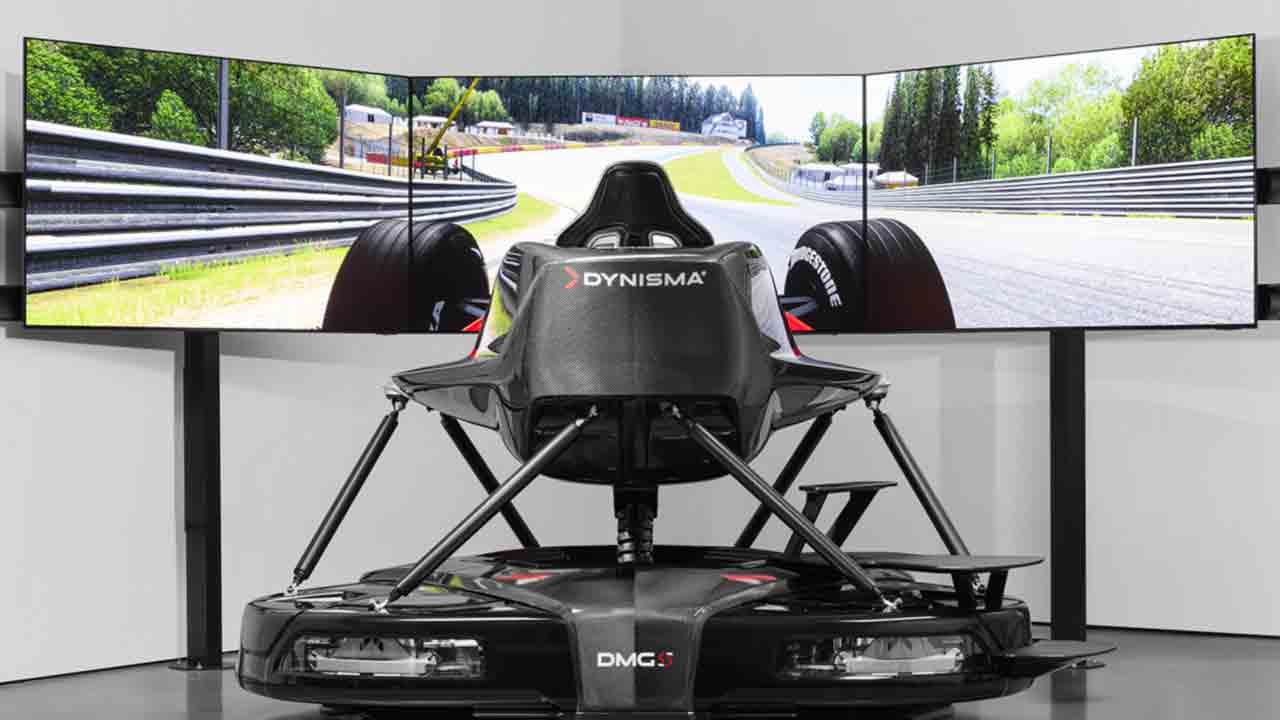
Dynisma has unveiled the DMG-S, a new compact driving simulator that brings Formula 1-derived technology to motorsport teams, training centers, and drivers seeking professional preparation away from the racetrack.
Developed in the United Kingdom, the DMG-S is a Driver-in-the-Loop simulator, a category designed to allow drivers to interact with virtual vehicle models in real time. The goal is to provide an experience close to real-world driving, with physical responses capable of reproducing dynamic vehicle behavior, changes in grip, and car reactions under different track conditions.
The new system uses the same motion technology platform already employed by Dynisma in high-level motorsport and automotive industry programs. According to the company, the simulator can reproduce critical sensations for drivers, including impacts from curbs, weight transfer, tire wear, loss of grip, and the onset of oversteer.
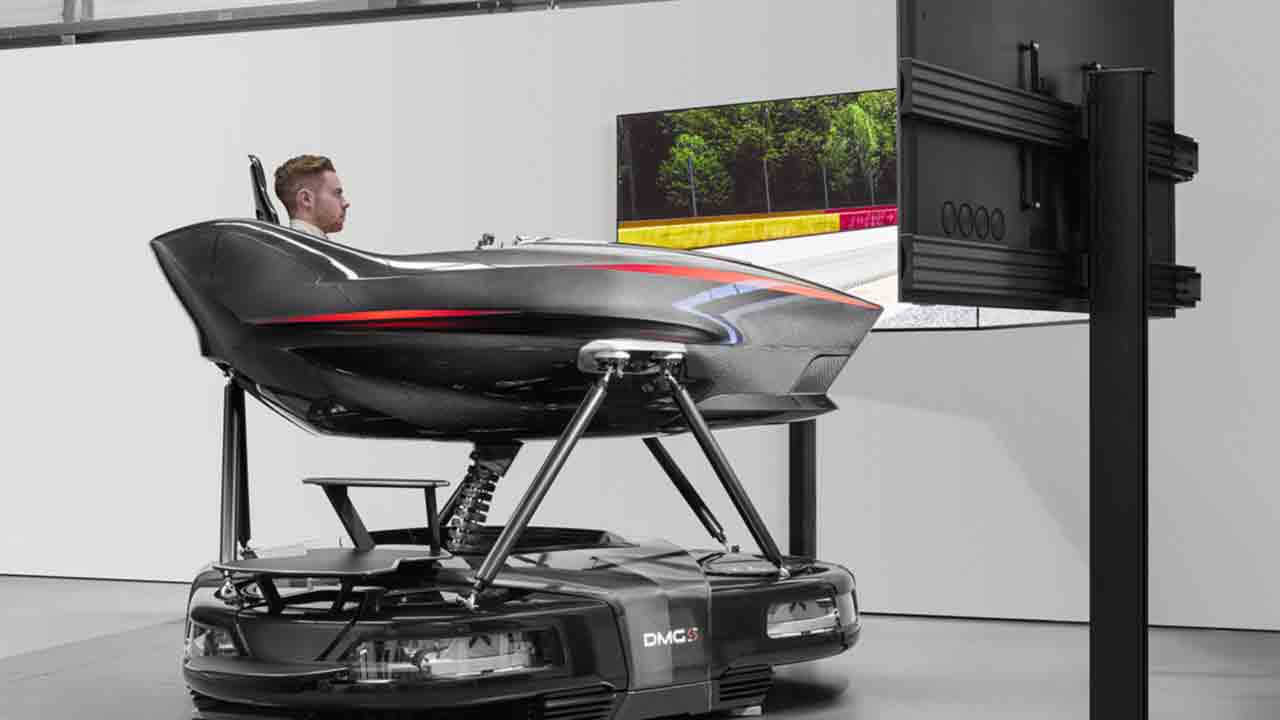
With motion latency below 5 milliseconds and bandwidth exceeding 50 Hz, the DMG-S was engineered to deliver fast and precise responses to driver inputs. In practice, this allows users to experience a more realistic connection between the steering wheel, pedals, vehicle model, and track behavior.
The simulator was created to expand access to a technology previously limited to larger and more expensive facilities. The DMG-S occupies an area of only 2.5 m x 2.5 m, uses a simple floor-mounted installation, and requires only a 32-amp single-phase power supply. This eliminates the need for complex infrastructure such as remote electrical cabinets or large dedicated installations.
Dynisma will offer the simulator in two configurations. One features a low-heel driving position designed for GT and touring cars. The other uses a high-heel position better suited to single-seater race cars, closely matching the driving posture found in categories such as Formula 2, Formula 3, and other open-cockpit racing series.
The DMG-S can be configured with three 77-inch displays or integrated with virtual reality and extended reality headsets. The platform is compatible with multiple software packages and will be supplied with Assetto Corsa as standard, while also supporting other simulation titles and environments such as F1, iRacing, and Le Mans Ultimate.
In addition to serving advanced consumer racing platforms, the simulator also supports professional simulation environments, visualization tools, and vehicle modeling software. This enables teams to use the system for driver training, setup evaluation, race preparation, and circuit familiarization.
The DMG-S design was developed in collaboration with Darryl Scriven, Design Director at D5 and former Head of Design at McLaren Automotive. The objective was to create a product whose appearance reflects the performance and technical precision of the platform.
Ash Warne, Founder and Chief Technology Officer of Dynisma, stated that the company always starts with accuracy and correlation to real vehicle behavior. According to him, a simulator only becomes valuable when drivers can trust what they feel through the platform, from grip changes and weight transfer to vehicle balance at the limit.
Graeme Cook, CEO of Dynisma, highlighted that the DMG-S represents an important step in making the company’s technology more accessible to the motorsport market. As simulation becomes increasingly important for driver development and race preparation, he believes the new system offers a professional solution capable of supporting the growth of teams, academies, and competitors.
The DMG-S joins Dynisma’s simulator lineup alongside the DMG-1, a platform aimed at advanced engineering programs in categories such as Formula 2, Formula E, and IndyCar. At the top of the range sits the DMG-360XY, the company’s most advanced model, featuring infinite yaw capability and 5 meters of physical movement across the XY axes.
Today, Dynisma platforms are used in championships including Formula 1, Formula 2, Formula E, the FIA World Endurance Championship, GT racing, and IndyCar, where test repeatability, data correlation, and driver feedback are increasingly critical to improving performance and reducing development costs.
+ LITENING system updated for a new type of air warfare
Source and images: Dynisma. This content was created with the assistance of AI and reviewed by the editorial team.
